Home / Generators / Portable Generators

Portable Generators

For homeowners who want backup power without a permanent installation, or who just need reliable power on the go, a portable generator is one of the most flexible tools you can own. Unlike a home standby system, a portable generator isn’t wired into your house or tied to a concrete pad. Roll it out, add fuel, start it up, and you’ve got power for your refrigerator, sump pump, tools, or campsite within minutes. No electrician required, no permits, no waiting around for an outage to see if it works.

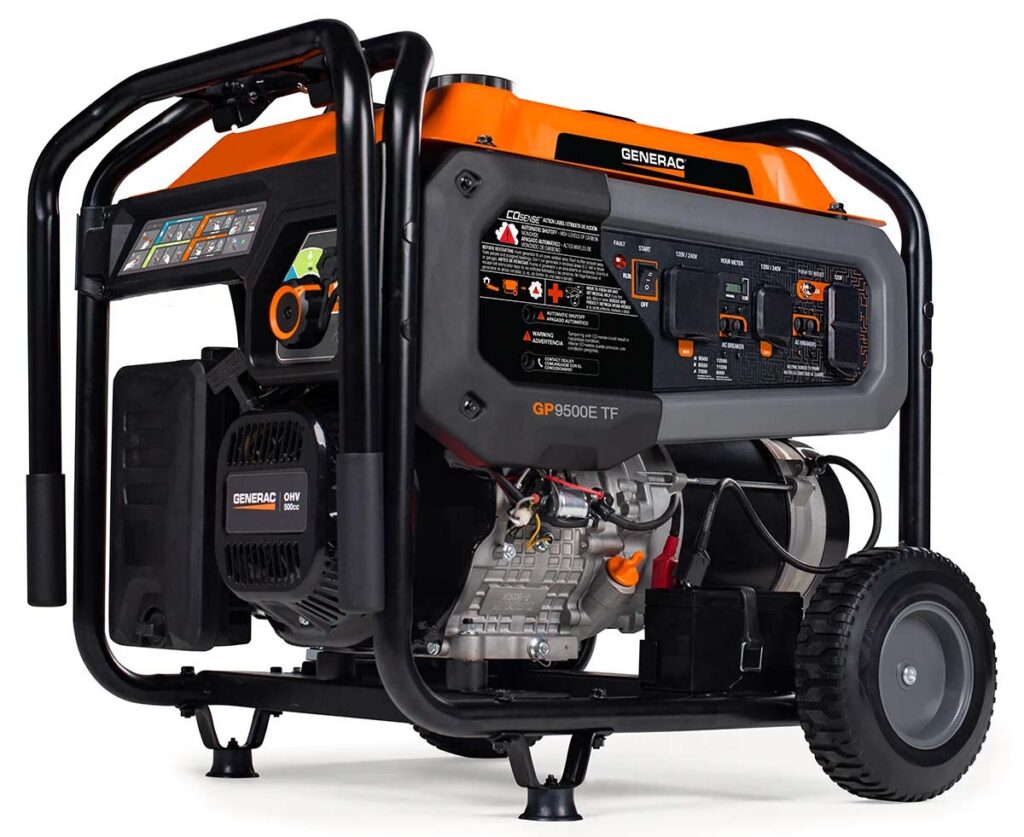
Explore the key components of a portable generator. Select any hotspot to learn more.

a portable generator

Increase your portable generators mobility with convenient handles to enhance your leverage and make it easier to transport power to where you need it most.

Never-flat wheels make it easy to roll the generator into position, no air, no flats to worry about.

The control panel is where you start and stop the engine, track runtime with the hour meter, and plug in loads through the breaker-protected AC receptacles. Built-in COsense adds a safety check: red means it shut down due to a carbon monoxide hazard, yellow means it detected a system fault and needs service.

On supported models, switch between gasoline and propane with a simple turn of the dial, no tools required. On Tri Fuel models, it also gives you the option to run on natural gas, so you're never stuck waiting on one fuel source.

Power Where and When you Need It

Portable generators are built to go wherever the job takes them: plugged straight into appliances and tools with an extension cord, or connected to your home’s circuits through a manual transfer switch or generator inlet. There’s no automatic startup and no permanent hookup; you decide when it runs and what it powers. That makes a portable unit just as at home backing up a few circuits during a storm as it is running power tools at a job site or keeping the lights on at a campsite.

Runs on the Fuel You Already Have

Most portable generators run on gasoline, so fueling up is as easy as a trip to the gas station, no propane tank or natural gas line required. Dual-fuel models are also available, giving you the option to run on gasoline or propane depending on what’s on hand. Either way, you’re not tied to a fixed fuel source, which makes portable generators a practical choice for anyone who wants backup power without a fixed installation.

Sized for the Job, Sized for the Home

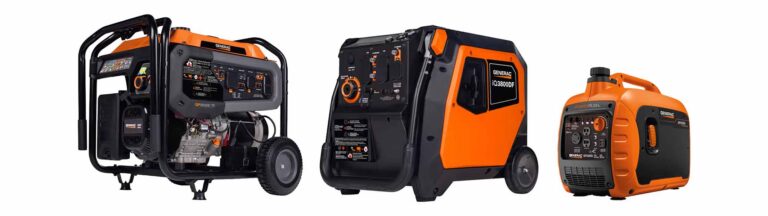
Portable generators come in a wide range of outputs, from compact inverter units that can power a laptop, mini fridge, or a few strings of lights, to larger open-frame models with enough output to run a sump pump, furnace blower, and refrigerator during an outage. Figuring out your running watts versus starting watts is the key to sizing correctly. It’s the difference between a generator that keeps your essentials running and one that trips a breaker the moment your fridge compressor kicks on.

a row of portable generators

Quiet Enough to Take Anywhere

Inverter-style portable generators produce cleaner, quieter power than traditional open-frame models, often running well below the noise level of standard construction generators, especially at partial load. That makes them a better fit for campgrounds, tailgates, and residential neighborhoods with noise ordinances. Larger open-frame models trade some quiet operation for higher output and a lower price point, a tradeoff worth weighing based on how and where you’ll use the generator.

Built to Go Where You Go

Weight and portability matter as much as power output. Smaller inverter generators are designed to be carried by hand, while mid and full-size portable units typically include fold-down handles and wheel kits so you can move them without a hand truck. Some models also offer parallel capability, letting you connect two smaller generators together for more output without stepping up to a larger, heavier unit.

No Professional Installation Required

One of the biggest advantages of a portable generator is that you don’t need an electrician or a permit to start using it. That said, safe operation still matters: portable generators must always run outdoors, well away from windows, doors, and vents, to avoid carbon monoxide buildup. If you plan to power your home’s circuits directly rather than running extension cords, a manual transfer switch or generator inlet, installed by a licensed electrician, is the safe way to do it. Never plug a portable generator directly into a wall outlet.

Interested in a Whole-home Generator Solution?

Check out Benge’s Residential Standby Generator Buyer’s Guide. Our experts share what to look for to help you find the best fit for your needs.

cover of generator buyers guide

Interested in a Whole-home Generator Solution?

Before you buy, check out Benge’s Residential Standby Generator Buyer’s Guide. Our experts share what to look for to help you find the best fit for your needs.