
Indiana’s Largest Generator Dealer
Home / Generators / Home Standby Generators / Residential Standby Generator Buyer’s Guide
How to Choose a Whole-House Generator to Protect Your Family & Home
A comprehensive resource for homeowners in Indianapolis and surrounding central Indiana neighborhoods researching whole-house generator options
Last reviewed in July 2026 by Chris Williams and Brian Schroeder (Benge’s Hardware) and Brian Burries (EleXcor)
Ice storms, high winds, brownouts, fallen trees, and tornadoes just happen here in central Indiana.
When they do, they often knock out the power. Even Polymarket traders and psychic hotline “experts” can’t tell you when the next major, unexpected inconvenience is coming.

Don't Get Left in the Dark
Book a free assessment with a Master Electrician to learn what size generator you need to protect your home.
Don't Get Left in the Dark
Book a free assessment with a Master Electrician to learn what size generator you need to protect your home.
But that doesn’t mean you can’t act in advance to determine just how tough it’s going to be on your house and loved ones when it does. If you’ve ever waited one out at home in Indianapolis or a nearby suburb, you know the worry builds. (And how it gets worse as an outage drags on!)
This is even harder if you don’t have a whole-house generator. You might have even texted friends in the dark while you waited, writing things like:
- “Ugh, we just finished the basement in March. The sump pump stopped, and it’s been raining nonstop. It’s dead quiet down there. I’m going to have to keep going down to check the pit.”
- “Did a big grocery run this afternoon, like $280 worth. Plus, I’ve got a freezer full of breastmilk, too. How long does a packed fridge and freezer actually stay cold?”
- “Genuinely confused. Our furnace runs on gas, so why did the heat cut out the second the power went out? At what temp do I have to worry about the pipes freezing?”
Already know you want a generator for your home? Ready to get started? Book your free in-home assessment with an EleXcor Master Electrician →
If you’re past that stress and are now looking at a whole-home generator, you likely have questions. You may ask what it costs to purchase a standby unit to provide backup power and what size generator your house truly needs.
You might even have the nagging worry that someone’s going to try to sell you a generator you’ll never use.
This guide to whole-house generators—created for central Indiana homeowners—is just for you. It answers all those questions and more in plain terms. Use the table of contents ahead to jump straight to the information you need the most.

How Whole-Home Generators Work
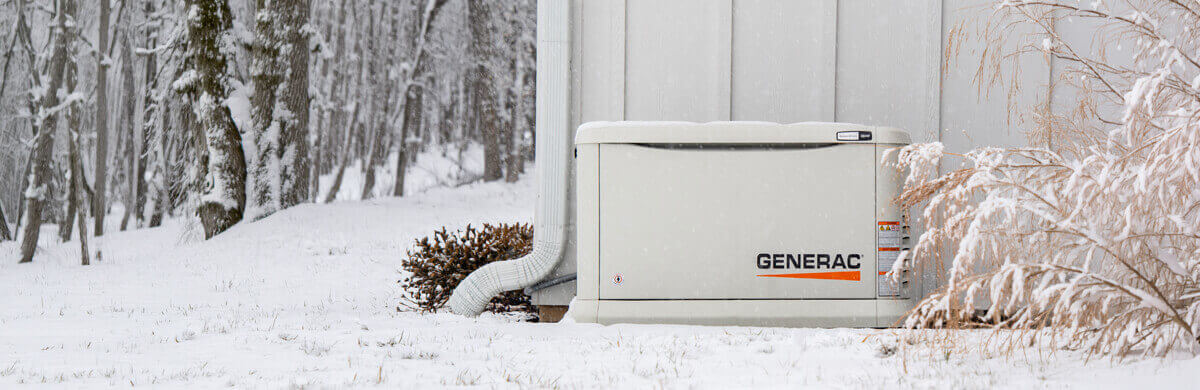
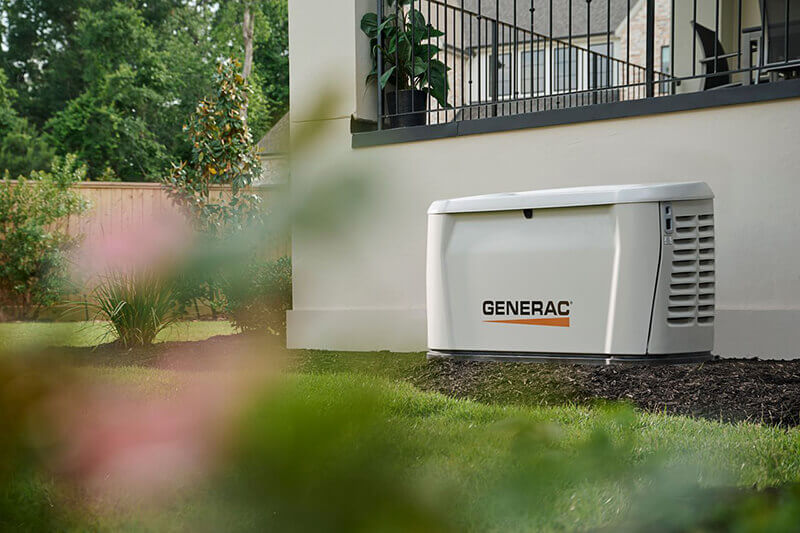
A whole-house generator (also called a standby or stationary backup generator) sits outside your home.
It’s permanently installed on a small pad and about the size of a central air conditioner. It runs on your home’s natural gas line or propane supply. So, unlike a portable generator, there’s no fuel to haul or store.
It acts like a watchdog, monitoring your home’s power supply around the clock using an automatic transfer switch. The moment it detects an outage, your automatic transfer switch starts your generator.
Within a few seconds, your house has power again. Then, once utility power returns, the switch shuts the generator off.
The best part? You don’t have to do a thing. The system takes care of restoring power to your home, whether you’re home or not. In fact, many people with a whole-house generator will sleep through a brief outage and only learn about it the next morning if the stove clock flashes 12:00 // 12:00 // 12:00.
Another bonus is that Master Electricians install your whole-house generator outdoors and vent it. So you don’t need to worry about carbon monoxide poisoning when it runs like you do when using a portable generator near your house.
What Happens When the Power Goes Out?
Three things happen when there’s a power outage at your home:
- You lose power from your utility provider.
- Your whole-house generator system detects this outage and then automatically turns on.
- Automatic backup power provides electricity to your home.
Did you know that 1 in 5 power outages are not weather related?
Many outages in central Indiana happen on calm, sunny days due to equipment failure, vehicle accidents, routine maintenance, or increased demand. Reliable whole-home generators ensure you have electricity that you and your family can depend on every single day.
The generator transfer time is often no more than 10 seconds. For most folks, that means your power-outage backup starts up in less time than it takes to find a working flashlight.
Plus, since the automatic transfer switch makes the call on your behalf, there’s nothing you need to do. The sequence starts whether you notice the outage or not.
Easy peasy.
Whole-House vs. Portable Generators
A portable generator makes you do the work. You’re the one who rolls it outside to run and adds fresh gas every few hours until power comes back.
These mobile generators only power what you plug into them. So bigger items, like your furnace or well pump, usually aren’t an option.
Their use also comes with some real safety risks. Annually, improper portable generator use kills about 100 people in the United States from carbon monoxide poisoning. That’s why the American Red Cross recommends choosing a permanently installed stationary generator as the best residential backup power option.
“The trouble with a portable generator is what some inexperienced people do with one during an outage, like setting it up to run from inside their garage or positioning it right up against a door instead of 20 feet away from their home. Stuff like this causes a lot of the carbon monoxide poisonings you hear about every year. What makes a standby generator better is that it’s installed outside permanently by a team of pros and will vent the right way, so nobody’s at risk.”
—Brian Burries, Master Electrician and EleXcor COO
An automatic whole-house generator provides the complete opposite experience. That’s because it’s already connected and ready to go. If it’s sized for full coverage, you can keep everything running like normal. That’s never an option with a portable unit.
That’s why these mobile generator units work best for camping trips and temporary power needs on job sites.
To keep your home powered during an outage, a portable generator may not be reliable. It’s not a good long-term solution.
What Can You Power With a Standby Whole-House Generator?
A whole-house generator can run pretty much anything in your home that uses electricity. That includes your HVAC system, so your furnace keeps the house warm on the coldest January nights, and your AC keeps it cool through a July heat wave.
It covers the refrigerator and freezer, your sump pump or well pump, lighting and outlets throughout the house, and the internet modem, router, and security system. It’ll keep your kitchen appliances and water heater running too.
What a generator actually powers during an outage depends on how it’s sized and set up, which is the next thing to figure out. But for most central Indiana homeowners, two things top the list.
The first is the sump pump, because heavy spring rains and snowmelt put it under the most strain right when an outage is most likely. The second is the HVAC system, since our summers and winters both swing to extremes, where losing heat or air conditioning can turn serious fast.
What to Look for in an Automatic Generator for Your Home
Picking the right size is one of the trickier parts of buying a whole-house generator because the right unit depends on your needs.
- Go too small, and it might trip offline the second your AC kicks on while your sump pump, refrigerator, water heater, and washer are already running, which defeats the whole point.
- Go too big, and you might end up having paid for capacity you’ll never need to pull.
It’s a lot like the fairy tale about Goldilocks and the Three Bears. What you want is a generator that’s sized by a Master Electrician so your unit is just right for your home.
Sizing With an In-Home Assessment by an Expert
You don’t have to figure out the exact size yourself.
Some of the most important questions in decision-making are ones you can probably already discuss with ease, e.g., how big is your home, what you want to keep running during an outage, and where you live.
Your answers to these questions will help point you in the general direction for sizing and give a Master Electrician a running start in pinning down the best whole-house generator to protect your home and family.
“For the assessment, it helps to have you there, because a lot of it’s you walking us through what you want covered by a whole-house generator. Figure on having us at your house for about an hour, maybe two, so there's no rush. That gives us enough time to do a thorough job because we know it’s important to get our recommendation and estimate right.”
—Brian Burries, Master Electrician and EleXcor COO
The rest of their expert in-home assessment involves walking through the house and adding up how much power is being drawn.
Master Electricians call this step load calculation, and it’s the work they do to recommend a perfect fit rather than just a guesstimate based on a chart of numbers.
Square Footage & Residential Standby Generator Sizes
Square Footage & Residential Standby Generator Sizes
Home size is the easiest place to start when sizing a whole-house generator.
Before you schedule an in-home assessment to determine the ideal model for your home, you can use this chart to get a rough idea of how square footage corresponds to common generator sizes, or our free home standby generator sizing worksheet.
GENERATOR SIZING OVERVIEW
| Smaller houses | Mid-size houses | Larger houses |
|---|---|---|
| Homes under 1,500 square feet generally fit a 10kW unit for essential coverage or 14kW for whole-home coverage | Homes between 1,500 and 2,500 square feet generally fit an 18kW unit for essential coverage or 22kW for whole-home coverage | Homes over 2,500 square feet generally fit a 24kW unit for essential coverage, or 26–28kW for whole-home coverage |
Remember, use these numbers just as a starting point. Two homes of the same size can require different standby generator solutions based on each homeowner’s needs and the challenges that may or may not need to be addressed during installation.
How Loud Is a Whole-House Generator?
Measured from 23 feet away (or a bit more than the depth of an average car parking spot), most 20kW models of standby generators from the major brands run between 65 and 70 decibels:
- Cummins 20kW (QuietConnect RS20): 65 dB
- Generac 20kW (Guardian): 67 dB (similar in volume to the noise of a running dishwasher)
- Kohler 20kW (20RCAL): 70 dB
What Impacts Generator Size Needs
How much generator you need depends on how much of your house runs on electricity when the power’s out. Your heating setup usually has the biggest effect on the size of a unit that you’ll need.
If you’re like 58% of homeowners in Indiana, you’re in luck because you have a gas furnace. These barely need to draw power from a generator, since the gas itself generates heat for your home.
That said, if your home uses electric heat, those types of furnaces require a blower to work, and a blower requires power from a generator to warm your home during an outage.
A whole-house generator’s size will also be affected by your air conditioning setup. In an AC unit, the surge that occurs when it starts and the compressor kicks on has the greatest impact on the capacity you’ll need from your standby generator (e.g., a 5-ton AC system typically draws a larger surge than a 2-ton).
Another factor that affects your sizing needs is water usage. If your home has a well instead of city water, its pump will draw a high electrical load. During an outage, you’ll be left without running water until your automatic generator cranks into action.
After these basics are covered, the other top considerations are often related to what you’re willing to (or able to) do without when you lose power.
For example, some people need to ensure their generator can power medical equipment, and others want to make sure their WiFi stays up and running. What’s most important varies from family to family.
Fuel Sources
The fuel source you’ll choose for your whole-home generator depends on what’s already powering your house.
In essence, this means if you have a utility gas line, you’ll need a standby generator that runs on natural gas. And if you don’t have a gas line, you probably already have a propane tank as your home’s fuel source, so you’ll need a standby generator that runs on propane.
Natural Gas: A natural gas whole-home generator hooks right into the gas line that already feeds your furnace and water heater. It usually costs less to install than propane.
As long as your natural gas utility provider’s service isn’t interrupted, you won’t run out of fuel to power your generator. For most homeowners in Indianapolis proper (Marion County), their natural gas comes from Citizens Energy, a not-for-profit utility serving around 266,000 homes and businesses.
For homeowners in the surrounding suburbs and counties, their natural gas typically comes from CenterPoint Energy, which serves around 625,000 customers across central, south-central, and southeastern Indiana.
Propane: Propane-based systems provide power to your generator using propane from your tank. In rural and unincorporated areas across central Indiana (where a natural gas utility line doesn’t service homes), propane is often the most practical choice for fueling a whole-house generator.
These systems connect your house’s generator to a propane tank on your property that you likely already use for heating, hot water, and even cooking.
Since there’s only so much propane in a tank, propane-fueled whole-house generators have a finite runtime that’s determined by the size of their tank. For instance, if your home has a standard 500-gallon propane tank, a typical standby generator at an average load can run continuously for 6 to 10 days.
That said, most outages in central Indiana don’t last for that long! As such, either option for fueling a whole-home generator will allow you to cover the basics without hassle.
Why Bigger Isn’t Always Better With Whole-House Generators
Sometimes, homeowners think that going with the bigger unit is the safer plan, but oversizing has its drawbacks.
An automatic residential backup generator that’s more than you need to power your house during outages burns extra fuel (costing you more than you’d otherwise need to pay with a right-sized unit).
“What I steer people away from is sizing their standby generator to exact current needs because homes change. Today you might have an unfinished basement, but later you might turn it into a man cave space with a second fridge and full bath that require additional power. If your whole-home generator starts maxed out, you'll be stuck buying a whole new unit if you need more power down the road to back everything up. Giving yourself a little headroom upfront costs less than replacing your whole unit.”
—Brian Burries, Master Electrician and EleXcor COO
The Importance of an Expert Assessment Before Buying a Standby Generator
Getting a Master Electrician to complete an assessment will help you match your house with the ideal whole-home generator solution that keeps you prepared for a worst-case scenario without locking you into unnecessary costs.
Here at Benge’s, we’re all about the invaluable insights you can only get from going through the free home assessment process with a Master Electrician. That’s why we connect every customer eyeing whole-home backup power with the pros at EleXcor.
Its experienced team knows how to size a generator for your exact home. Their hands-on, careful approach is designed to help homeowners avoid paying for more than they need.
With a free EleXcor in-home assessment, you’ll sleep easier knowing you’ve got the right match for your family and its needs.
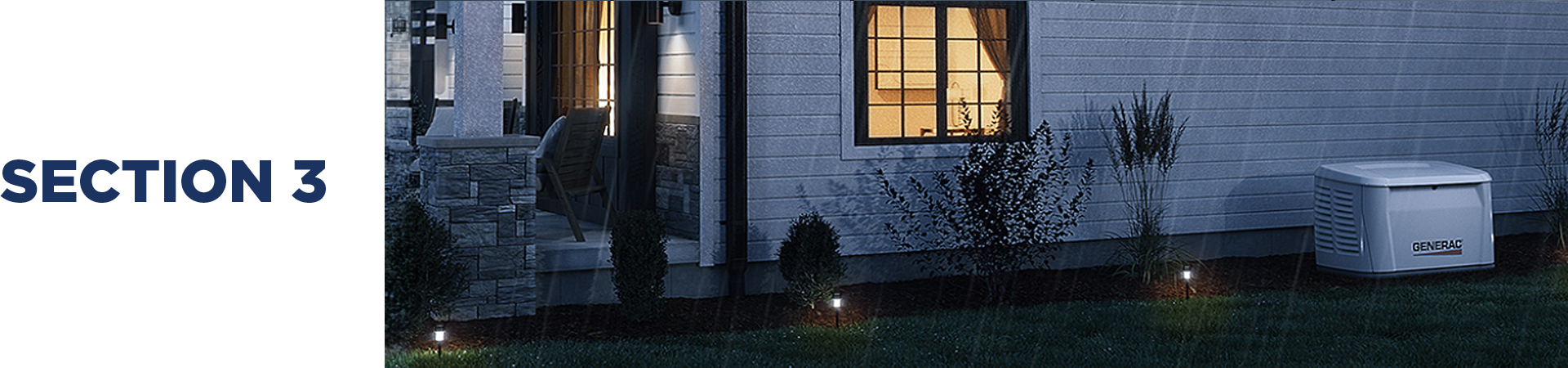
Understanding Whole-Home Generator Coverage Levels
Often, a homeowner’s first instinct is to go with complete coverage and back everything up—and for some families, that’s definitely the best way to go.
But we’re realists. Not every home needs complete coverage, nor does every family have the budget to accommodate the expense.
The good news is that it’s not an all-or-nothing situation. There’s a middle ground between essential coverage and complete coverage. That path costs quite a bit less than full coverage but still keeps most of what really matters powered up during an outage.

Residential Utility Power in Central Indiana: A Look Ahead
Bad storms aren’t the only thing that can knock out power to a home. Just as it is elsewhere in the country, demand on central Indiana’s grid is climbing due to factors like the growth of data centers.
All this electrification is changing how much electricity our area uses.
In fact, AES Indiana’s 2025 Integrated Resource Plan (PDF) describes the regional grid as at a turning point, and the Indiana Utility Regulatory Commission has projected that statewide peak demand could rise as much as 60% by the 2030s, driven largely by data center load.
In short, central Indiana’s grid is being asked to do a lot, and it’s only going to be asked to do more and more.
When it comes to coverage levels, the question really comes down to this: When the power goes out at your house, what do you want to happen?
Some folks don’t want to feel noticeable at all. They want every single light to turn on and every appliance to stay up and running as if nothing has happened at all. Others are fine putting up with a few inconveniences as long as the essentials stay on, like the sump pump and the fridge.
The rest of this section covers those two levels in more detail.
Sizing a Whole-Home Generator Just to Cover the Essentials
“Stuff like your sump pump and fridge don’t pull a lot of power, so a smaller-sized standby generator can cover those—no problem—during an outage. The air conditioning is different. To run your AC when the power’s gone, you need a bigger generator. And each time you move to a bigger unit, the final cost of your entire-home generator investment grows.”
—Brian Burries, Master Electrician and EleXcor COO
Backing up a few circuits (instead of every single thing that uses power in your house) is what we mean by essential coverage with a standby generator.
This type of setup involves pairing a properly sized whole-home generator with a transfer switch that feeds a sub-panel holding just the circuits you choose. That way, when the power goes out, those few “essential” circuits stay live, and the rest of the house waits for the grid to come back.
Most central Indiana homes have a similar list of essentials. Because gas heats most homes here, the blower is the only electrical load the heating system needs.
After that, it’s the refrigerator and freezer, the sump pump, and the well pump for homes on their own water in Johnson, Hendricks, Boone, and other similar counties in central Indiana.
Next, the garage door opener, a few key lighting circuits, and the router and modem.
Essential coverage usually doesn’t include central air, so if you have elderly residents, infants, or anyone whose health is affected by extreme heat, it may not be enough to survive a summer outage.
Of everything on that list of essentials, the sump pump is almost every homeowner’s top priority to keep running because—if you have a house with a basement or crawlspace—it’s that device that keeps unwanted groundwater from rising under your foundation.
And, of course, your sump pump has to work hardest during the same storms that cause power outages.
When you lose electricity to run it and don’t have a whole-home generator backup in place, your chances of winding up with a flooded basement go up, way up!
This is why essential coverage is the floor even for buyers watching the budget closely. Protecting the basement is the highest-stakes single circuit on the list.
Who Is a Good Candidate for Essential Coverage With a Whole-House Generator?
Essential coverage usually fits when all three of these are true for you:
- You don’t need central AC, an electric water heater, an electric range, an electric dryer, or an EV charger running during an outage.
- Your main concern is preventing damage like frozen pipes, a flooded basement, or spoiled food.
- You want to keep the total project cost down by limiting the install scope.
“Essential coverage works best for folks who just want to get through a normal outage without spoiled food or a flooded basement. Around here in central Indiana, we don’t have massive hurricanes so we’re pretty lucky. Most outages only last for a few hours, maybe overnight. When you’re a homeowner who isn’t losing power for days at a time, essential coverage is usually plenty.”
—Brian Burries, Master Electrician and EleXcor COO
That covers the entry level. Keep reading to learn what it looks like if you decide to go the other route and back up your whole house.
Sizing a Whole-Home Generator for Complete Coverage
Who Is a Good Candidate for Complete Coverage With a Whole-Home Generator?
With complete coverage, everything that runs on electricity in your house stays powered, so nothing changes when the power goes out. With it, you get a system sized to meet your home’s entire electrical demand, and it uses load management to keep demand within the generator’s range.
There are two ways to get there. The first is a large generator wired to a whole-house transfer switch that powers every circuit, all the time.
Another option is a small, right-sized generator combined with a smart transfer switch that watches the load and temporarily cuts non-essential circuits when a high-demand appliance fires up. Each of these whole-house generator options provides complete coverage for your home.
Who Is a Good Candidate for Complete Coverage With a Whole-Home Generator?
Complete coverage usually makes the most sense if any of these apply:
- You’d rather not think about what’s running during an outage at all.
- You have electric water heating, an electric range, an electric dryer, an EV charger, or some mix of these that essential coverage wouldn’t keep on, and you want them running anyway.
- You work from home and need the lights and your computer to stay on during a multi-day outage.
- You have elderly residents, infants, or family members affected by extreme heat or cold, or multiple HVAC zones that all need to keep running.
“If you don’t want to deal with an outage at all, that’s a whole-house setup, and it’s usually more straightforward than people expect. When running everything would take a bigger generator than someone wants to pay for, we’ll pair a smaller one with a smart switch. You give up a little convenience, but it costs less, and it’s as close as you can get to true complete coverage.”
—Brian Burries, Master Electrician and EleXcor COO
With size and coverage decided, the next question is cost. The following section covers, at a high level, what a whole-house generator typically costs in central Indiana and details the factors that impact the final number.
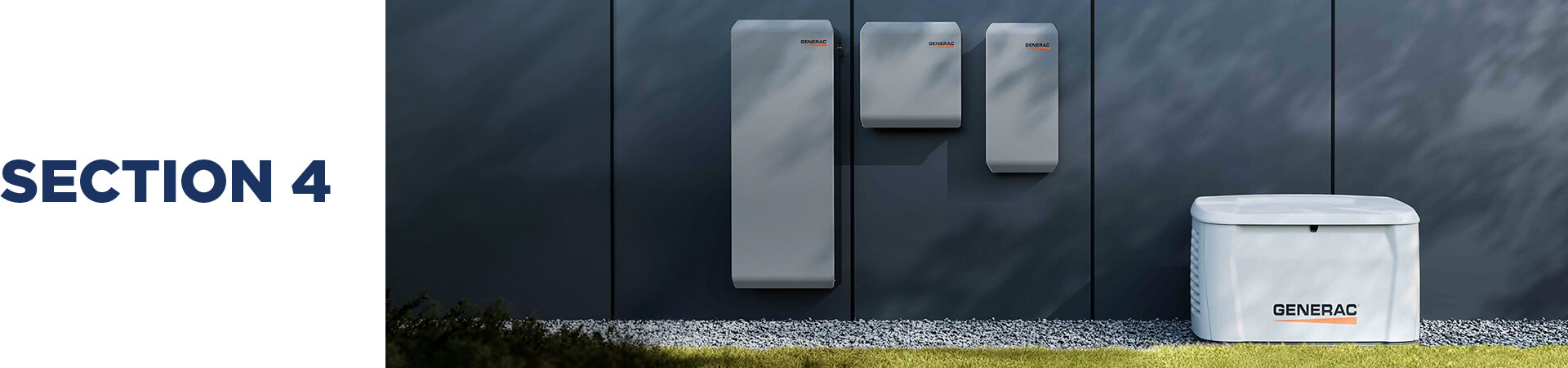
What a Standby Generator Costs in Central Indiana
Every store and installer has different pricing, but a whole-house generator bought at Benge’s and installed by EleXcor starts at around $10,000.
Depending on their needs, the typical central Indiana homeowner spends between $10,000 and $20,000 all-in, with the final amount determined by the unit’s size and the level of involvement the installation requires.
Initial Automatic Generator Investment Breakdown
Upfront, One-Time Costs to Install a Whole-House Generator
The generator itself is the largest line, but the total includes several others.
The table below breaks down the upfront, one-time costs so you can see where the money goes before you get a quote.
BASIC STANDBY GENERATOR COSTS
| Factor | Typical Price Range |
|---|---|
| Whole-home generator kit (18kW–26kW), includes unit, automatic transfer switch, and mounting pad | ~$6,700–$13,000* |
| Standard installation, includes labor, permits, and inspections, etc. | ~$3,300–$7,000 |
OTHER SITUATIONAL COSTS (IF NEEDED, IN ADDITION TO TYPICAL COSTS)
| Factor | Typical Price Range |
|---|---|
| Sub-panel setup (for essential coverage) | ~$500–$1,500 |
| Gas line run beyond standard length | ~$15–$40 per foot |
| Extra electrical wiring/conduit | ~$6–$10 per foot |
| Electrical panel upgrade | ~$1,000–$3,000 |
| Gas meter upgrade | Varies by utility |
| Permits (one-time cost to cover installation work and inspections during and after the install) | ~$100–$500, varies by central Indiana municipality |
| Propane tank installation | ~$400–$1,800 |
*The entry-level complete install starts around $10,000, and it includes the smallest whole-house generator kit plus a standard installation. The only items you’ll see on your quote are those that your home actually needs.
In some cases, a project can exceed these average ranges for a few reasons. Stuff like larger generators, multiple HVAC zones, necessary electrical panel upgrades, long gas line runs, or EV charging being a requirement can all add to your final estimate.
“The costs in a quote for a whole-house generator that can end up surprising some homeowners are things like whether their gas meter can handle the added load or if their electrical panel needs an upgrade.”
—Brian Burries, Master Electrician and EleXcor COO
If you’ve done some digging online already, you’ve likely noticed a lot of variation among quotes, even from local providers. That’s because sometimes quotes fold in the costs of things like getting permits, doing gas line work, and making panel upgrades.
In contrast, others only include the price of the unit and labor (leaving those additional charges as “surprises” when you get your final bill).
So what will it cost at your house? The ranges provided in the table above should give you just a starting point for your budgeting.
It’s not uncommon for two homes that look the same from the street to have installs that differ in price by thousands of dollars. Ultimately, the exact figure will depend on your needs.
Standby Generator Warranty Coverage Explained
Most major brands back their residential standby generators with a 5-year limited warranty. It covers defects in materials and quality in the major components—the engine and alternator chief among them—with the most protection in the early years and narrower coverage later.
For instance, with Generac units, the structure is typical: parts, labor, and limited travel in years one and two; parts only in year three; and major engine and alternator components in years four and five (per Generac documentation).
Routine maintenance items like oil, filters, and the battery aren’t covered, and neither is damage from improper installation or skipped maintenance.
If you want longer protection, extended 7- and 10-year plans are available from the manufacturer for an added cost, but they must be purchased within 12 months of buying the generator. Generac’s 10-year plan covers parts, labor, and limited travel for 10 years or 2,000 operating hours, whichever comes first.
Two things keep that warranty valid: the generator must generally be installed by a certified installer, and warranty repairs must go through an authorized service dealer.
Buying from a certified whole-house merchant like Benge’s and having it installed by Master Electricians, such as those who work for EleXcor, protects your coverage from day one.

What to Expect: The Costs & Value of Ownership
A generator isn’t something you pay for once and forget. Like a car, it needs regular upkeep to stay reliable, and that upkeep costs money across the years you own it.
The table below lays out the ongoing costs so you can budget for them year to year, including the routine self-test, oil and filter changes, and annual professional service.
ONGOING COSTS OF OWNING A WHOLE-HOME GENERATOR
| Factor | Typical Price Range |
|---|---|
| Professional maintenance service (yearly)** | ~$200–$500 per year |
| Battery replacement (typically needed every 2–3 years) | ~$100–$200 per battery |
| Fuel costs during outages | Cost varies based on model, outage duration, and load |
| Fuel costs for self-test cycles | Modest; cost varies based on model |
**Many Master Electricians charge for professional maintenance services separately, but EleXcor makes things easy for homeowners. Its installation package pricing covers five years of maintenance.
What’s the Expected Lifespan of a Whole-Home Generator?
According to Generac, a whole-house generator that’s installed correctly and serviced on schedule usually lasts 20 to 30 years, making it one of the longer-lived investments you’ll make for your home.
Maintenance really is key to generator durability and generator longevity. When it comes to how long whole house generators last, it’s only those units that get serviced annually that reach the upper end of that standby generator lifespan range.
“Ads for whole-home generators make it seem like once you put one in you’re all done. But what if it doesn't start? That’s the part nobody thinks about. Like most pieces of equipment, a standby generator needs maintenance. That’s why EleXcor offers a yearly service to check the connections and look for any other potential issues.”
—Brian Burries, Master Electrician and EleXcor COO
Will Having a Standby Generator Increase My Home’s Value?
Many folks who are considering a significant investment like this wonder: Does a generator increase home value?
In fact, industry sources generally suggest that a properly installed and well-maintained whole-house generator can add 3% to 5% to a home’s resale value in the U.S. However, the actual impact varies a lot by market.
When it comes to Indianapolis home value upgrades, dollar for dollar, whole-home generator ROI is real, especially since the central Indiana residential real estate market is competitive.
According to Redfin’s latest data, homes in our area go under contract in a median of 22 days. A home with a standby generator already installed will stand out because it offers something most others on the block—and in the neighborhood in general—likely won’t have as an amenity.

Behind the Scenes: Installing a Whole-House Generator
After you’ve gone through the assessment process, nailed down what coverage you want, and gotten a sense of costs, the step most people think is next is ordering your whole-home generator and scheduling its installation; however, if your neighborhood has an HOA, you have one more step to take before starting the installation process.
If you haven’t already, you need to check what your HOA’s covenants allow regarding whole-home generators before you buy.
Fortunately, standby generators are rarely banned outright from HOAs.
There are, however, many associations that only allow their installation under certain conditions, e.g., they’ll say they can only be installed in certain spaces relative to your lot lines, or that they have to be screened or covered so they’re not visible from the street or a neighbor’s yard. Hence, they’re not visible from the street or neighbors’ homes.
In other instances, HOAs will place a limit on weekly self-test runs or require an architectural committee review.
As the idiom goes, knowledge is power.
Being totally in the know—upfront—regarding what your HOA’s governing documents require (and what they don’t) when it comes to whole-home generator installation and usage will no doubt save you a lot of trouble (and time!) if you consider these rules as part of your planning instead of addressing this stuff after the fact.
What Goes Into the Installation of a Standby Generator?
The install itself begins once you’ve bought, starting with permitting and material ordering. The rest of the installation more or less happens in a single visit.
The team sets the mounting pad, then positions the generator on it and makes the electrical connections. Then, they’ll inspect their work by testing the system.
Depending on the size and expertise of your crew (as well as the difficulty of your unit’s placement), this work is often completed within a day (around 6–10 hours).
“What’s different in Indiana is there’s no statewide standard for installing residential whole-home generators. Each city and county sets its own licensing and permitting, so an electrician who’s licensed to do an install in Marion County isn’t automatically covered to work on a home in Hamilton County. At EleXcor, our team knows what each different jurisdiction in our region requires, and we pull the permits ourselves. That way, our homeowner customers aren’t left dealing with the hassles that can come with finishing this part of the process.”
—Brian Burries, Master Electrician and EleXcor COO
How Long Until I’m Officially Good to Go?
According to EleXcor’s team, most homeowners here in central Indiana can expect the whole process to take around four weeks from assessment, purchase, and signing the installation order to a fully operational generator.
Permitting is usually the longest single phase, and the duration depends on where you live, since each municipality runs its own permitting office. For instance, a standby generator project in Carmel might wrap up on a different timeline than one on the south side of Indianapolis, or even one in nearby Westfield.

Is a Stationary Backup Generator Worth It?
For many central Indiana homeowners, yes. A standby generator protects both the house and the people in it, and the case for one is stronger now than it used to be.
J.D. Power found that the average length of the longest outage customers experienced climbed from 8.1 hours in 2022 to 12.8 hours by the middle of 2025. Put that together with data center growth straining the regional grid, and longer, more frequent outages look like what central Indiana should plan for.
In the end, the answer to whether a whole-house generator is worth it comes down to how much the protection one can provide matters to you. The damage and disruption that come with an outage are real, and a standby generator is the insurance against these risks.
For plenty of households, that protection is easily worth the cost.
FAQs About Residential Standby Generators
These answer the practical questions buyers ask most. For more comprehensive information, see our blog post, which provides additional answers to frequently asked questions about whole-home generators.
How Loud Is a Whole House Generator While It’s Running?
Modern standby generators run around 60 to 70 decibels, about the level of normal conversation or a central air unit. The install team handles placement during the assessment, which keeps the sound away from where you’d notice it most.
Do I Have to Be Home During the Installation of a Whole-Home Generator?
Yes, for the assessment and for parts of the install day. For Benge’s customers, the team at EleXcor will reach out in advance to coordinate and let you know what its Master Electricians will need from you during the assessment and installation.
“On your whole-house generator’s installation day, you don’t have to be around from start to finish, but we’ll need to get inside, and your power will be off for a stretch, so plan for that.”
—Brian Burries, Master Electrician and EleXcor COO
Can I Add EV Charging Support Later After My Whole-Home Generator Is Installed?
That depends on how your standby generator system was sized. A unit sized with capacity to spare can later accommodate an additional load, such as an EV charger.
One size may be right for your current needs, but it may limit your ability to accommodate an additional major load on the unit.
So, if you think EV charging is something you might want coverage for in the future, raise this need during the assessment process so your generator recommendation accounts for it.
I Just Bought a Whole-House Generator! How Long Will It Take Before I Can Expect It to Be Fully Installed and Powered On?
Plan on around 4 weeks from assessment to powering on, keeping in mind that permitting and inspection processes can expand that timeline.
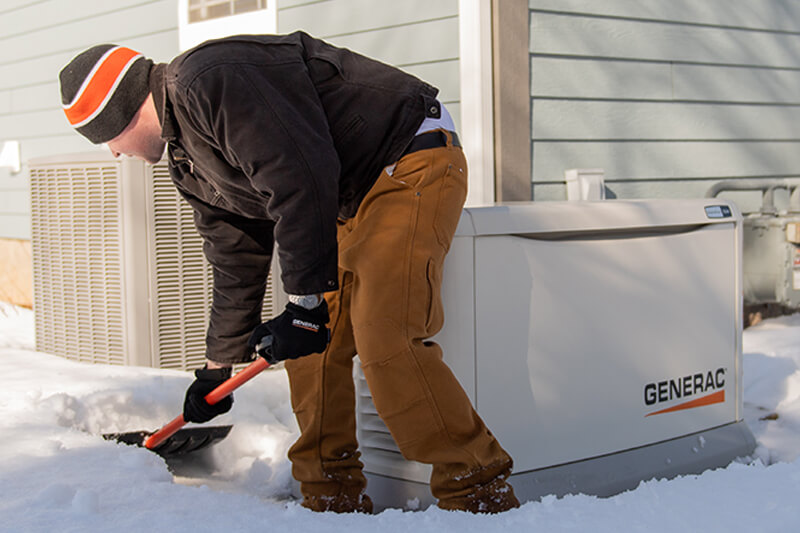
Keep your standby generator ready to run
Don't let snow or ice prevent your whole-house generator from doing its important work of powering your home during an outage. After a winter storm, clear snow and icy obstructions away from your generator, ideally leaving 3 ft. of clearance on each side of your unit.
Why Buy Your Whole-House Generator at Benge’s
Benge’s, a locally owned chain of 10 hardware stores and central Indianapolis generator dealer, currently offers turnkey installation of Generac units (the most-installed standby generator brand on the market) via our respected partner EleXcor.
When you stop into one of our stores, an associate can walk you through the whole-home generator buying process.
Since our helpful team doesn’t work on commission, you can get the answers you need without a hard push to invest in a unit that’s bigger than you need to protect your home and family.
The Benefits of Turnkey Generator Installation With EleXcor
 For installation of residential whole-home generators, Benge’s recommends EleXcor. Its Master Electricians have served residents and businesses across central Indiana since 1967.
They’re licensed, bonded, and insured in the state, with an A+ BBB rating and a place in the top 3% of licensed contractors in Indiana.
EleXcor’s team has sized and installed standby generators across the region—in houses, apartment complexes, surgical centers, and retail spaces. Its pros even installed generators to provide backup power to Lucas Oil Stadium. Go Colts!
/// Our Expert Reviewers
Chris Williams
President, Benge’s Hardware
Chris Williams is the president of Benge’s, overseeing the company’s growth from a single store to 10 locally owned locations across central Indiana. A leader in the hardware retail industry since 2019, he provides strategic guidance, manages Benge’s strategic projects, coordinates vendor partnerships, oversees permit applications, and handles zoning.
Brian Burries
Chief Operating Officer, EleXcor
Brian Schroeder
Director of Operations, Benge’s Hardware
Brian Schroeder serves as director of operations at Benge’s hardware stores, where he ensures consistent service standards across all 10 locations in central Indiana. He supports the in-store staff and oversees daily operations, vendor relationships, and the venerated customer experience that defines the Benge’s brand.