
Power Stations
Rechargeable portable power for outages, recreation, projects and everyday backup — without gasoline, engine exhaust or a permanent generator installation.
Power Without the Engine.
A portable power station stores electricity in a rechargeable battery so it can supply power when and where you need it. Instead of producing electricity with a gasoline engine, it delivers energy that has already been stored in the battery.
That makes power stations useful for smaller backup loads, recreation, remote projects and situations where quiet operation and portability are more important than the extended output of a fuel-powered generator.
Recharge It. Store It. Take Power With You.
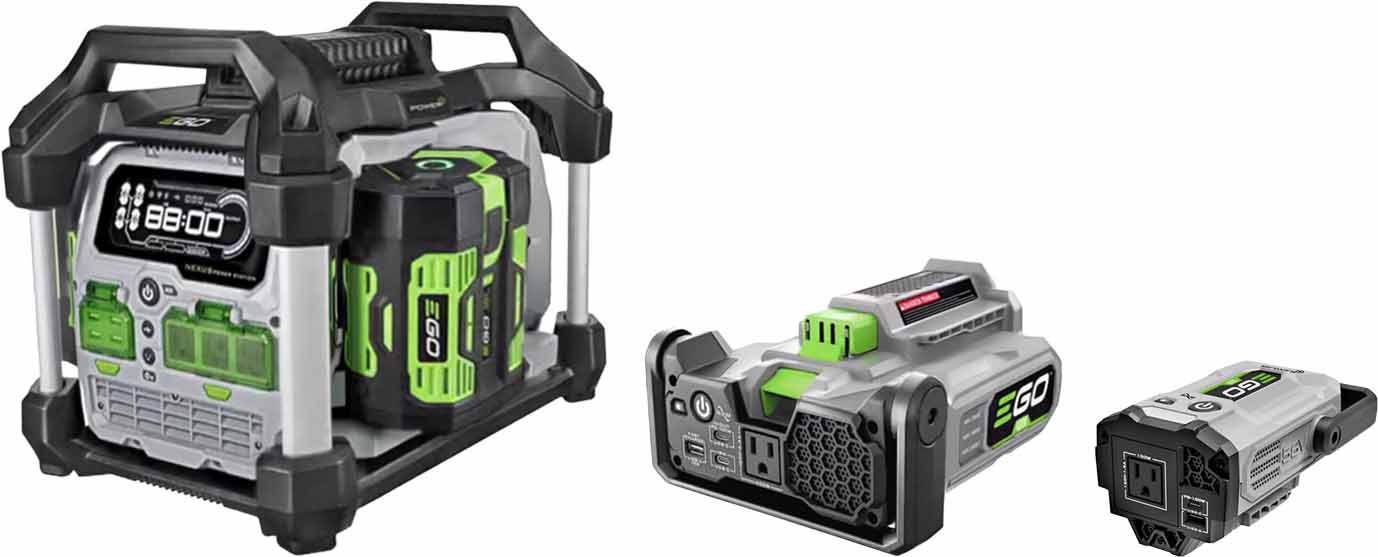
Power stations package rechargeable battery storage, electrical outlets and charging controls into one portable unit. That makes them useful anywhere convenient stored power is more important than running a traditional engine-driven generator.
Recharge Before You Need It.
Power stations must be recharged after their stored energy is used. Charging options and recharge times vary by unit, so consider where the power station will be used and how easily you'll be able to replenish its battery.
Stored Power You Can Move.
Battery capacity and portability usually increase together with size and weight. Smaller units are easier to carry, while higher-capacity systems may provide substantially more stored energy at the cost of additional weight.
Sized for the Job. Sized for the Home.
Two numbers matter when comparing portable power stations: how much energy the battery can store and how much electrical output the unit can deliver at one time.
A large battery does not automatically mean every appliance can be powered. The equipment you connect must fall within the power station's output capability, and the battery must have enough stored energy to operate those loads for the amount of time you need.
Match the Battery to the Way You'll Use It.
The right power station depends on more than physical size. Think about the loads you'll connect, how long they need to run and how you'll recharge the battery afterward.
Quiet, Fume-Free Power.
Because power stations store electricity rather than generate it with a combustion engine, they offer a very different type of portable backup power than gasoline or propane generators.
No Gasoline Engine
Power stations operate from rechargeable battery storage, so there is no gasoline engine, fuel tank or engine exhaust while the unit is supplying power.
Low-Noise Operation
With no combustion engine running, power stations provide quiet electrical power for situations where generator noise would be inconvenient.
No Permanent Installation
Portable power stations can be charged, stored and moved where needed without installing a permanent home standby generator system.
Portable Power for More Than Outages.
Power stations can serve as convenient stored energy for smaller outage loads, recreation, projects and everyday situations where access to an electrical outlet is limited.
Need More Traditional Portable Generator Power?
If your priority is higher output, fuel-based runtime or powering larger loads during outages and projects, compare Benge's portable generator options.
Want Automatic Whole-Home Backup?
For permanent backup power that can respond automatically when utility service goes down, explore Benge's home standby generator options.
Find the Backup Power That Fits Your Needs.
Compare all Benge's generator options or visit your nearest Benge's Hardware for local help choosing the right backup-power solution.